Frost-Free Spigots Still Freeze in Lancaster - Here's Why
The spigot isn't defective. One overlooked habit is almost always the actual cause.
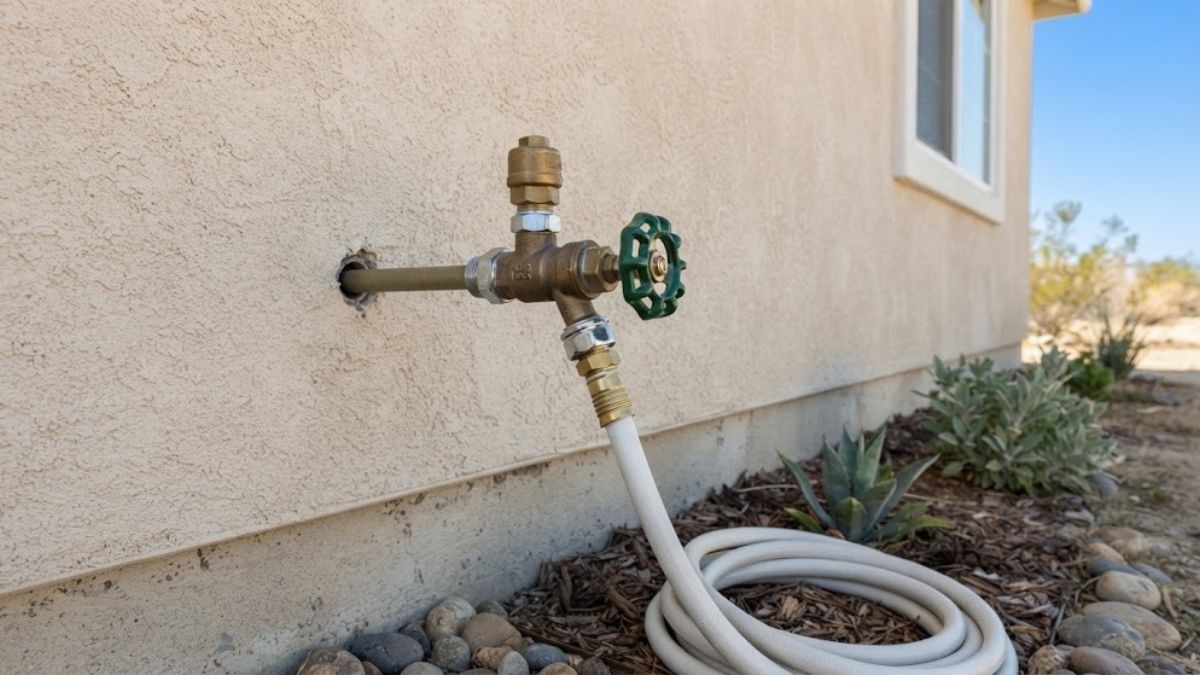
A frost-free spigot is supposed to solve outdoor faucet freezing. So why do Lancaster homeowners still get a split hose bib most winters? The answer is almost always the same overlooked detail - and it has nothing to do with the spigot being defective.
Why Freezing Is a Real Risk Here at All
Lancaster's summer reputation - highs regularly clearing 95 to 100°F - makes freeze risk feel like a non-issue. But the same high-desert elevation that drives those hot days also drives a strong overnight cooldown, and in winter, that cooldown regularly drops well below freezing after dark. A hose bib sitting on an exterior wall has no protection from that swing unless it's specifically built for it, and standard "frost-proof" hardware is not the same as a true frost-free spigot.
What Makes a Spigot "Frost-Free"
A standard hose bib has its shutoff valve right at the handle, outside the wall - meaning water sits in that exposed section of pipe even when the tap is off. A true frost-free spigot moves the actual shutoff valve back inside the wall, into conditioned or at least buffered space, so the section of pipe exposed to outdoor air is normally empty when the tap is closed. No standing water outside means nothing left to freeze and expand.
The One Thing That Defeats the Design
A garden hose left attached over winter traps water in the spigot's stem, right in the section the frost-free design is supposed to keep empty. With a hose on, water can't drain back out of that stem after use, so it sits there exactly like it would on a standard spigot - and when a cold desert night hits, it freezes and splits the pipe from the inside, often without any visible sign until the thaw. This is the single most common reason a homeowner ends up with a "defective" frost-free spigot that was actually working exactly as designed until a hose got left on.
The Actual Fix Is Free
Disconnect every garden hose from every outdoor spigot before the first cold nights of the season, and store them separately rather than leaving them coiled and attached. That's it - no insulation, no cover, no product to buy, just breaking the one habit that defeats the design. If you've already got a cracked spigot from a prior winter, the pipe usually needs to be cut back and replaced rather than patched, since a hairline split in copper or galvanized pipe tends to widen with the next freeze-thaw cycle rather than heal on its own. If a split spigot led to any water reaching your interior walls or flooring before it was caught, that's a separate conversation with our water damage restoration team - the leak repair and the cleanup are two different jobs.
The "It's the Desert" Blind Spot
Longtime desert residents are often the ones most caught off guard by this, precisely because the daytime heat makes freeze protection feel unnecessary. A homeowner who's lived through a decade of 100-degree summers reasonably assumes freezing isn't a real concern here - but Lancaster's overnight cooldown is a genuine, regular feature of the local climate, not a rare cold snap. The mismatch between what the daytime weather suggests and what actually happens after dark is exactly what leads people to skip a simple, free precaution that a resident of a visibly colder climate would never think to skip.
Other Freeze Points Worth Checking
- ●
Exposed supply lines in a garage or crawlspace, which get less benefit from the house's own heating than interior walls do.
- ●
Irrigation backflow preventers, which are often mounted above ground and just as exposed as a hose bib.
- ●
Pool or spa equipment lines, if you have them, which can freeze the same way an outdoor spigot does.
What "Freezing" Actually Means Here
Lancaster doesn't need a hard freeze that lasts all night to cause damage - a temperature dip to around 32°F for even a few hours in the pre-dawn hours is enough to freeze standing water in an exposed pipe stem. That kind of brief overnight dip is a normal, expected part of a high-desert winter, not an unusual cold snap. Because the days on either side of that dip can still be mild or even warm, it's easy for the actual freeze event to pass unnoticed until a split pipe shows up days or weeks later during the next thaw-and-refreeze cycle.
That delay between the actual freeze event and the moment you notice water damage is worth remembering: if you find a wet spot near an exterior wall in January or February with no obvious cause, working backward to a cold night from a few weeks earlier is a reasonable first guess, not a stretch. It's also a good reason to do a quick visual check of every outdoor spigot after the season's first hard cold snap, rather than waiting for a leak to announce itself.
FAQ
Yes. It only takes one cold night with a hose still attached to split the stem, and Lancaster's overnight lows drop below freezing regularly enough in winter that it's not a rare event.
Look at where the handle sits relative to the wall - a true frost-free spigot has a long stem running back through the wall to an interior shutoff, not just a valve at the exterior handle. If you're not sure, we can confirm during a service call.
Need a Plumber in Lancaster?
Call (714) 750-8637 - we'll get to Lancaster soon.