Toilet Running Non-Stop? What It's Costing You in the High Desert
It's almost always one of two parts, and there's a free test that tells you which one before you call anyone.
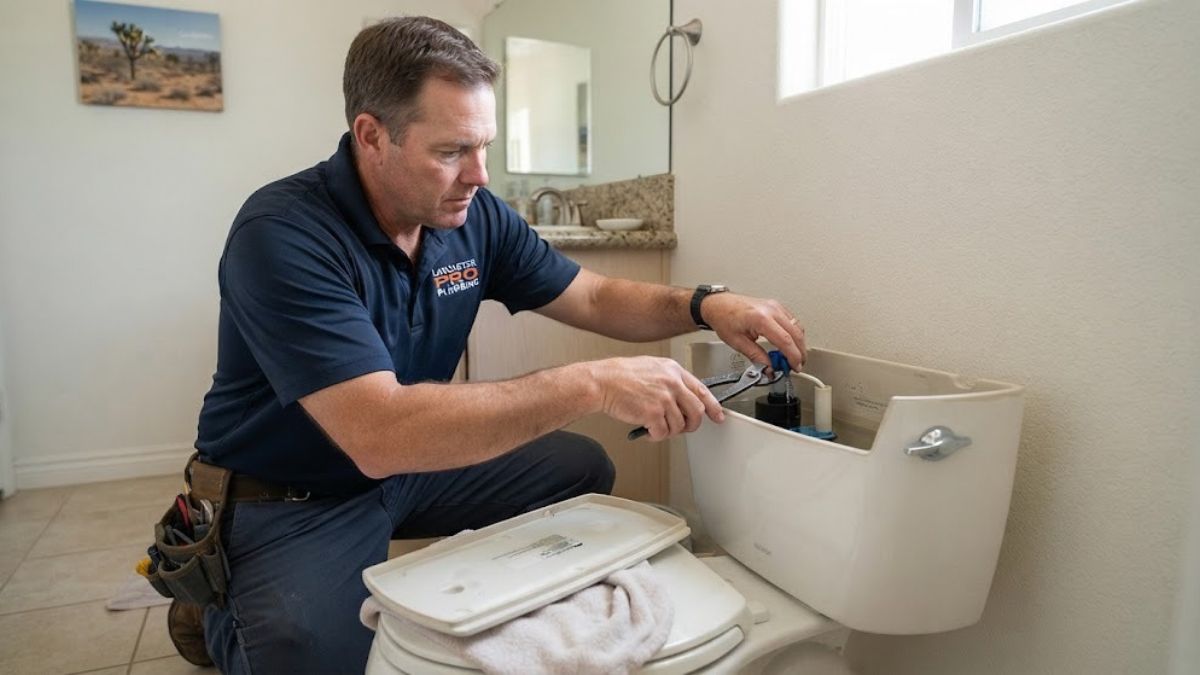
A toilet that keeps running after the tank fills isn't just an annoying sound - it's continuously wasting water, and in a high-desert city where water is imported from hundreds of miles away, that waste is worth taking seriously rather than living with.
The Two Most Likely Culprits
A running toilet almost always comes down to one of two components failing to seal. The flapper - the rubber seal at the bottom of the tank - can warp, crack, or stop sealing properly over time, letting tank water slowly leak into the bowl and triggering the fill valve to keep topping off. The fill valve itself can also fail to shut off completely once the tank reaches the right level, running continuously even with a perfectly good flapper. Lancaster's hard water accelerates wear on both of these rubber and plastic components faster than it would in a soft-water area, since mineral deposits interfere with a clean seal.
A Simple Test You Can Run Yourself
Add a few drops of food coloring to the tank water and wait about 15 minutes without flushing anything. If color appears in the bowl, the flapper is letting water through and needs replacing. If the tank water level itself won't stop rising or the fill valve keeps cycling on its own, the fill valve is the more likely culprit. This costs nothing and takes less time than a phone call, and it tells us exactly what part to bring along if you do decide to call us in.
What a Running Toilet Actually Wastes
A continuously running toilet can waste a significant amount of water every single day it's left unaddressed - not a one-time event but an ongoing drain that keeps adding up on every water bill until it's fixed. In a city where water is imported from hundreds of miles away and blended with a limited local groundwater supply, that waste isn't just a personal cost; it's using a genuinely finite resource for nothing. Fixing it is usually a quick, inexpensive part replacement, not a major repair.
What's Worth Doing Yourself vs. Calling For
A flapper replacement is a reasonable DIY fix for a comfortable homeowner - it's an inexpensive part and a simple swap. A fill valve replacement is slightly more involved but still within reach for many people. Where it's worth calling a plumber is if you've replaced both and the toilet still runs, since that can point to a cracked overflow tube, a misaligned float, or a tank-to-bowl seal issue that's easy to misdiagnose without experience. See our full list of services if a toilet repair turns out to need more than a part swap.
Other Toilet Symptoms Worth Knowing
- ●
Phantom flushing - the toilet briefly refills on its own every so often with no one using it, which is actually the same slow-flapper-leak problem as constant running, just intermittent rather than continuous.
- ●
Weak flush - often a partially clogged rim or siphon jet, sometimes worsened by mineral deposits from hard water building up inside the bowl's internal passages.
- ●
Slow tank refill - can point to a partially closed supply valve or a fill valve that's wearing out even if it hasn't started running continuously yet.
Why Hard Water Makes This a Recurring Issue
Toilet flappers and fill valve seals in Lancaster wear out faster than the same parts would in a soft-water city, since mineral deposits interfere with a clean, complete seal over time. That's not a reason to buy premium parts specifically marketed for hard water - it's a reason to expect these components to need replacement somewhat more often here than the general lifespan estimates on the packaging assume, and to not be surprised when a toilet that was fine last year starts running again this year.
If More Than One Toilet Is Acting Up
A single toilet running is almost always that toilet's own worn part. Multiple toilets in the same house developing similar symptoms around the same time is more often a sign of the water conditions themselves - hard water wearing down every rubber seal in the house at a similar rate - rather than coincidence. If that's the pattern you're seeing, it's worth mentioning when you call, since it points toward addressing the water quality itself rather than replacing the same parts repeatedly on a rotating basis.
A Note on Pre-1994 Toilets
Toilets installed before 1994 typically use significantly more water per flush than modern low-flow models, which compounds the waste from a running unit even further - an older, higher-volume toilet that's also running continuously wastes noticeably more water overall than a newer, low-flow model would with that exact same worn flapper problem. If your home still has original fixtures from an older build era, a running toilet is a good prompt to also ask about whether a full fixture upgrade makes practical sense, not just a simple parts repair, especially given how much more water an aging fixture moves with every single flush cycle.
FAQ
Yes - a continuously running toilet is one of the most common sources of unexplained water waste in a home, since it runs 24 hours a day until it's fixed, not just when someone uses it.
A brief refill cycle right after flushing is normal. Running continuously, or restarting on its own minutes after the last flush, is not.
Need a Plumber in Lancaster?
Call (714) 750-8637 - we'll get to Lancaster soon.