Why Lancaster's Hard Water Is Killing Your Water Heater Early
It's not bad luck or a bad unit - it's a specific mineral process happening inside the tank every time it heats water.
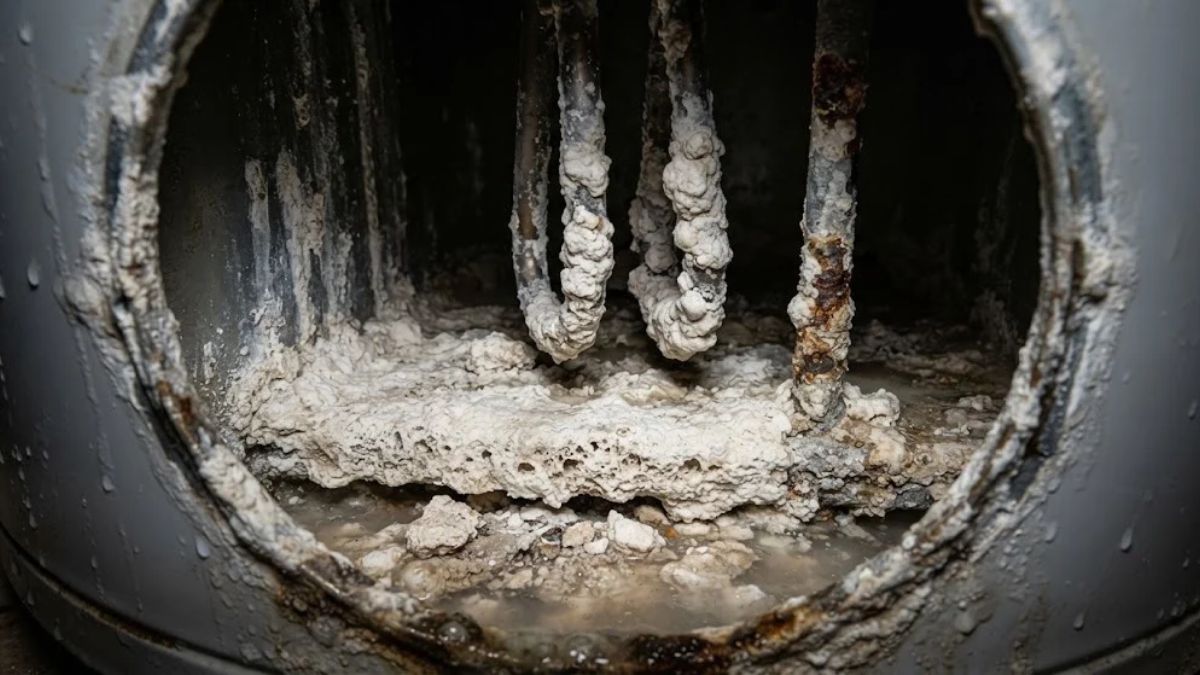
If you've replaced a water heater in Lancaster sooner than you expected, hard water is almost certainly why. This isn't a generic "hard water is bad" warning - it's a specific, mechanical process, and understanding it is the difference between flushing a tank on schedule and paying for an early replacement.
What's Actually Happening Inside the Tank
Lancaster's water is a blend of Antelope Valley groundwater and imported California Aqueduct supply, and both sources carry a heavy load of dissolved calcium and magnesium. Those minerals stay dissolved in cold water, but heat changes their chemistry: as water warms inside a tank, calcium and magnesium fall out of solution and turn into solid scale. In a tank water heater, that scale settles on the bottom, right where the burner or heating element does its work.
Once a layer of scale sits between the heat source and the water, the heater has to work harder to get the same result - the scale acts as insulation, slowing heat transfer. Over time, that extra strain wears out the burner or element faster, and in gas units, sediment on the tank bottom can also create hot spots that stress the tank itself. In a tankless unit, the effect is different but related: scale coats the inside of the narrow heat-exchanger passages, gradually restricting flow and reducing efficiency until the unit throws an error or stops delivering consistent temperature.
How Much Life Are You Actually Losing?
In a soft-water market, a standard tank water heater commonly runs 10 to 12 years before it needs replacing. In a hard-water market like Lancaster's, that number often drops well below that range when a unit is never flushed - not because the equipment is defective, but because scale buildup is doing real, measurable damage the whole time. The unit doesn't fail suddenly; it fails earlier than it should have, quietly, one heating cycle at a time.
What Actually Slows This Down
- 1
Flush the tank annually. Draining several gallons from the bottom valve removes loose sediment before it hardens into a bonded scale layer.
- 2
Descale a tankless unit on schedule. Circulating a mild descaling solution through the heat exchanger restores flow that scale has gradually choked off.
- 3
Consider a whole-house water softener if scale is showing up in more places than just the water heater - fixtures, faucets, and appliances all take the same mineral load.
Signs You've Already Passed the Maintenance Window
Rumbling or popping sounds from the tank, rusty water right when a tap is first opened, and hot water running out faster than it used to are all signs scale has already built up significantly. At that point, a repair may still make sense - but it's worth having a plumber look at the whole unit rather than treating one symptom in isolation, since scale-related wear tends to affect more than one component at once. Our water heater repair page covers what a repair-versus-replace conversation actually looks like once you're at this stage.
Why This Hits Lancaster Harder Than a Coastal City
A water heater in a coastal California city drawing from a softer supply doesn't face the same scale load, so the manufacturer's stated lifespan is a more reliable estimate there. In Lancaster, that same manufacturer number assumes water conditions the unit will never actually see - which is exactly why a flushing schedule matters more here than the owner's manual usually emphasizes. This isn't a defect in how manufacturers write their guidance; it's a gap between a national average and a specific regional water supply that the average doesn't account for.
What Skipping Maintenance Actually Costs You
The cost of neglect here isn't one dramatic failure - it's a pattern of smaller ones. A unit that scales up unmaintained tends to need more frequent repair calls as components wear under the extra strain, and each of those calls costs something even before the eventual full replacement. A single annual flush, by comparison, is a small, predictable expense that head off most of that pattern before it starts. Looked at over the life of the unit, the math consistently favors maintenance over reaction.
A Quick Way to Check Your Own Water Heater
- 1
Run the hot tap for a minute and check the color and clarity - cloudy or rust-tinted water right away is worth noting.
- 2
Listen near the tank while it's heating for rumbling, popping, or crackling - normal operation is close to silent.
- 3
Check the floor around the base of the tank for any dampness, which can mean a developing tank leak rather than just scale.
- 4
Note how long hot water actually lasts compared to a year ago - a shrinking window is a real, measurable sign of reduced capacity.
None of this replaces a professional flush, but it's enough to tell whether a call is worth making sooner rather than later. If more than one of these checks raises a flag, that's usually a sign the unit has been running with scale buildup for a while, not that something suddenly broke overnight.
FAQ
Regular flushing slows scale buildup significantly, but it doesn't remove the minerals from your water supply the way a softener does. Flushing treats the symptom inside the tank; a softener addresses the water itself.
A tank unit tends to hold up better here because loose sediment falls to a spot at the bottom that's simple to drain out. A tankless system runs more efficiently overall, but it demands a stricter descaling routine in a market with water this mineral-heavy.
Need a Plumber in Lancaster?
Call (714) 750-8637 - we'll get to Lancaster soon.