If You Smell Gas, This Isn't a Same-Day-Later Call
A rotten-egg or sulfur smell, a hissing sound near a gas line or appliance connection, or dead vegetation in a patch of yard with no other explanation are all signs of a possible gas leak. If you notice any of these, leave the property, avoid using any electrical switches or open flames on your way out, and call your gas utility's emergency line before calling us - they're equipped to respond to an active leak immediately, and utility response is the appropriate first call for a suspected leak, not a standard service appointment.
Installation and Non-Emergency Repair
- ●
New gas line runs for appliances - a range, a water heater, a dryer, or an outdoor fire feature or barbecue hookup.
- ●
Relocating or extending existing gas lines during a kitchen or laundry remodel.
- ●
Repairing a line found to have a slow leak during a pressure test, rather than an active, smellable emergency.
- ●
Capping unused gas lines left from a removed appliance, which should never be left as a dead-end connection.
Permits, Pressure Testing, and Code
Gas line work is permitted work in California, inspected by the local building department, and for real reason - an improperly sealed joint or an undersized line for a given appliance's demand isn't just a code violation, it's a genuine safety hazard that isn't always obvious until something goes wrong. Every gas line job we complete gets pressure-tested before it's put into service, confirming there's no leak at any joint before the appliance is ever connected and used.
Adding a Gas Line for a New Appliance
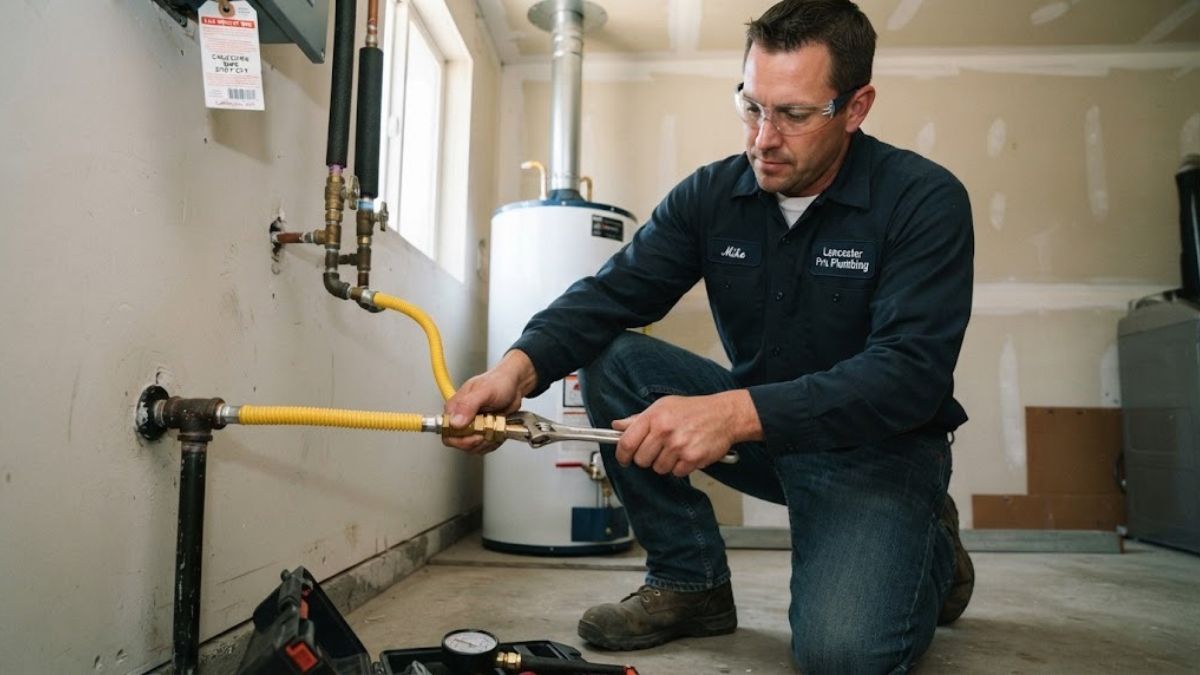
Switching from an electric to a gas range, adding an outdoor kitchen or fire feature, or installing a gas water heater where only an electrical hookup existed before all require running new gas line, sized correctly for that appliance's specific BTU demand alongside everything else already on the same gas meter. We calculate total household gas load as part of any new-appliance line install, not just the one connection in front of us, since undersizing a shared line is a real and common mistake that shows up as poor appliance performance under load.
Black Iron, Copper, or CSST
Black iron pipe has been the traditional standard for gas line work and remains a solid, widely used choice. Corrugated stainless steel tubing (CSST) has become increasingly common for its flexibility, which can reduce the number of joints needed to route a line through a wall cavity or attic space. Copper is used in some applications depending on local code and the specific installation. We select the appropriate material for your situation based on the run, the appliance, and current code requirements rather than defaulting to one material for every job.
Gas Lines Aren't a Set-and-Forget System
A gas line that was installed correctly years ago can still develop a slow leak over time as fittings age, especially at connection points that see any vibration or ground movement nearby. If you're doing a remodel that disturbs walls or flooring near existing gas lines, having those lines inspected as part of the project is a reasonable precaution rather than assuming decades-old work is still in perfect condition.
A Lancaster-Specific Consideration
Buried gas lines running from the meter to the house are subject to the same seasonal soil expansion and contraction that stresses other underground pipe in Lancaster's clay and sandy-loam soil. A rigid line with a joint under stress from ground movement is a genuine long-term risk, which is part of why flexible materials like CSST have become a more common choice for certain runs, and why an older buried line is worth a professional look if a property has settled or shifted noticeably over the years.
Questions
Leave the property immediately, avoid using light switches or anything that could spark, and call your gas utility's emergency line from a safe distance rather than waiting for a standard plumbing appointment.
Yes, gas line installation and modification is permitted work in California, inspected by the local building department before it's approved.
Yes, including sizing the line correctly alongside your home's existing gas appliance load.
Every gas line job is pressure-tested before being put into service, confirming there's no leak at any joint before an appliance is connected.
Ready When You Are
Call (714) 750-8637 - we'll get to Lancaster soon.