Spotty Dishes, Dry Skin, or a Water Heater That Keeps Scaling Up?
Filmy soap scum that won't rinse clean, skin and hair that feel different after a shower, dishes with mineral spots straight out of the dishwasher, and a water heater or fixtures that keep scaling up despite regular maintenance - these are the everyday symptoms of Lancaster's extremely hard water. A water softener addresses the mineral content itself; a filtration system addresses taste, odor, and other water-quality factors. Many households want both, installed together.
Two Different Jobs, Often Confused
A water softener specifically targets hardness - dissolved calcium and magnesium - through an ion-exchange process, and it's the direct answer to Lancaster's mineral-heavy water at the source. A filtration system addresses different things entirely: chlorine or chloramine taste and odor, sediment, or other water-quality factors, depending on the type installed. Neither one does the other's job - a softener won't improve taste, and a carbon filter won't remove hardness minerals.
Whole-House vs. Point-of-Use
A whole-house (point-of-entry) system treats all the water entering the home, which is the standard approach for softening since hardness affects every fixture and appliance equally. Point-of-use filtration - a filter under the kitchen sink or on the refrigerator line, for example - makes more sense for taste and drinking-water quality specifically, since there's little practical benefit to filtering water that's only going to a washing machine or an outdoor spigot. Many Lancaster households end up with both: a whole-house softener for hardness, plus a point-of-use filter at the kitchen tap for drinking water.
What the Install Actually Involves
- ●
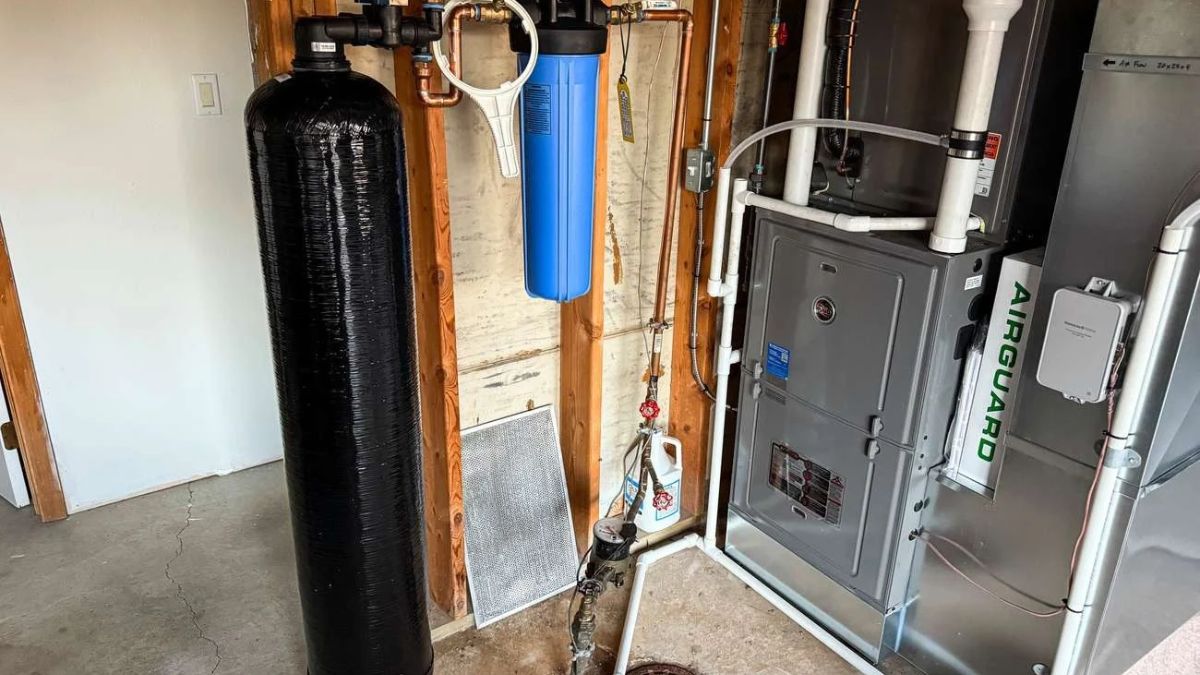
Tying into the main water line, typically near where it enters the house, ahead of the water heater so the heater benefits from softened water too.
- ●
Sizing the system to your household's actual water usage and the water's real hardness level, not a generic default.
- ●
A drain line for the softener's backwash cycle, which needs a suitable nearby connection point.
- ●
Walking through ongoing upkeep - salt refills and resin bed maintenance - so the system keeps performing at the level it did on day one.
The Anode Rod Connection
Softening removes calcium and magnesium through ion exchange, and that process happens to raise the water's ionic conductivity - which accelerates the electrochemical reaction your water heater's sacrificial anode rod relies on to protect the tank shell from corroding. The short version: installing a softener is still worth it, it just means checking the anode rod on a shorter interval afterward instead of assuming the original schedule still applies. We're happy to walk through this in more detail on the phone if it's relevant to your household.
If Your Property Is on a Septic System
A properly sized modern softener is generally compatible with a septic system, but the added backwash volume and the salt content of the discharge are worth factoring into system sizing for a property on septic rather than public sewer. This is a reasonable question to raise before installation if you're on one of Lancaster's rural or unincorporated properties relying on a septic system, so the softener is sized appropriately from the start rather than needing adjustment later.
What We Assess Before Recommending a System
Before recommending a specific softener or filtration setup, we look at your household's actual water usage, the number of bathrooms and major water-using appliances, and what specifically is bothering you about the water - scale, taste, odor, or some combination. That assessment is what determines system size and type, rather than defaulting to a one-size-fits-all recommendation that may be oversized, undersized, or simply solving the wrong problem for your household.
Questions
Not necessarily - it depends on what's actually bothering you. If it's scale and hard-water symptoms, a softener is the direct fix. If it's taste or odor, filtration is the answer. Many households want both for different reasons.
Typically near where the main water line enters the house, positioned ahead of the water heater so softened water reaches it too.
Modern, properly sized softeners are generally fine with a septic system, but backwash frequency is worth discussing if your property is on septic rather than public sewer.
A standard whole-house softener or filtration installation is typically completed in a matter of hours, assuming reasonable access to the main line and a nearby drain connection.
Ready When You Are
Call (714) 750-8637 - we'll get to Lancaster soon.