Does Lancaster's Soil Really Crack Sewer Lines?
Yes - and it's a specific, repeatable mechanism, not a vague excuse for a plumbing problem.
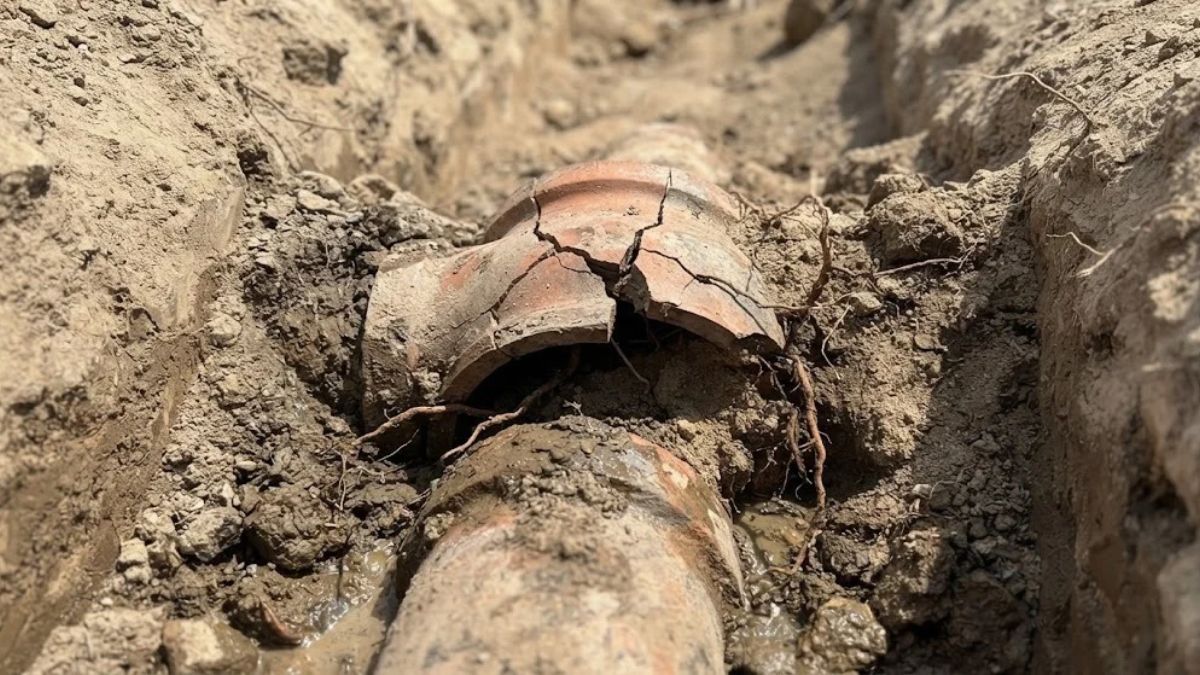
"The ground moved and cracked my sewer line" sounds like an excuse until you understand what Lancaster's soil actually does over the course of a year. This is a real, physical process - not a vague explanation plumbers give when they don't know the actual cause.
Lancaster's Soil Isn't Uniform
The Antelope Valley's soil is a mix of clay, sandy loam, and adobe-type material, and these behave very differently from each other with changes in moisture. Clay-heavy soil absorbs water and expands, then dries out and contracts as moisture leaves it - a cycle that repeats every year between the region's dry summers and its wetter winter months. Sandy loam drains faster and moves less, which means a single property can have sections of soil expanding and contracting at different rates depending on exactly what's underneath a given section of yard.
How Soil Movement Actually Damages a Sewer Line
A sewer lateral running from a house to the main line sits buried at a relatively shallow depth, which means it's directly affected by whatever the surrounding soil is doing. When clay-heavy soil expands after a rare heavy rain, it presses against the pipe from all sides; when it dries out and contracts, it can pull away and leave sections of the pipe unsupported. Neither condition alone is usually enough to break a healthy pipe outright, but repeated over years, that cycle stresses joints - the connection points between pipe sections - more than the pipe itself. A joint that's been stressed repeatedly is where a small gap eventually opens, and that gap is exactly what tree roots are drawn toward.
Soil Movement and Tree Roots Work Together
Once soil movement opens even a hairline gap at a pipe joint, that gap becomes an access point for tree roots seeking the moisture inside the sewer line - which is exactly why older Lancaster neighborhoods with mature trees see a disproportionate share of sewer backups. The soil movement creates the opening; the roots exploit it and make it worse over time by wedging the joint further apart as they grow. Treating only the symptom - clearing roots without addressing why they got in - tends to mean the same section clogs again within a year or two.
The Same Mechanism Affects Water Lines Under Slabs
This isn't limited to sewer laterals. The same soil expansion and contraction cycle stresses water supply lines running beneath slab-foundation homes, which is a real contributing factor behind the slab leaks that show up in older Lancaster properties. If you're dealing with a sewer line issue and also have a slab-foundation home built during Lancaster's 1970s-80s growth years, it's worth having both checked, since the underlying cause - a soil type that moves more than homeowners expect - is the same for both. Our slab leak detection and repair page covers what that inspection process looks like, and our drain cleaning page covers when a recurring clog is actually this kind of sewer line problem rather than a simple blockage.
How a Camera Inspection Confirms It
A video camera run through the line is what actually distinguishes soil-related joint damage from other causes like grease buildup or a one-time object lodged in the pipe. On camera, joint separation from soil movement typically shows up as a visible offset or gap between two pipe sections, sometimes with root intrusion already growing through it, rather than a uniform blockage of debris. That distinction matters because the fix is different: a debris clog responds to cleaning, while a separated or cracked joint needs an actual structural repair.
What Fixing a Soil-Damaged Sewer Line Involves
Depending on how much of the line is affected, repair can mean a localized spot repair at the damaged joint, or trenchless pipe lining that reinforces a longer damaged section from the inside without digging up the whole yard. A severely collapsed or offset section may still require traditional excavation, but that's the exception rather than the default - most soil-related joint damage caught before a full collapse can be addressed with a less invasive method. Which approach fits depends entirely on what the camera inspection actually shows, not on a guess made from the surface.
What You'd Actually Notice Inside the House
Soil-related sewer line damage rarely announces itself clearly at first. The earliest signs tend to be subtle - a slow drain in the lowest fixture in the house, an occasional gurgle from a toilet when the washing machine drains, or a faint sewer odor near a floor drain that comes and goes rather than staying constant. Because these symptoms are easy to dismiss individually, they're often ignored until a full backup forces the issue. Catching the pattern early, before it becomes a backup, is almost always the cheaper and less disruptive path.
If you've noticed any of these signs alongside mature trees near where your sewer lateral likely runs, that combination is worth mentioning specifically when you call - it points the inspection toward the section of line most likely to be affected, rather than starting the camera run blind.
FAQ
Not directly, but recurring backups, gurgling drains, or a sewer smell in the yard are signs worth investigating with a camera inspection rather than repeated snaking.
The soil movement itself affects any property regardless of age, but older sewer laterals - particularly clay or older PVC joints - are more vulnerable to the stress than modern materials built with more flexible joints.
Need a Plumber in Lancaster?
Call (714) 750-8637 - we'll get to Lancaster soon.