Which Trees Actually Threaten Your Sewer Line in Lancaster
The same fast-growing, drought-tolerant trees popular for quick desert shade often have the most aggressive, pipe-seeking root systems.
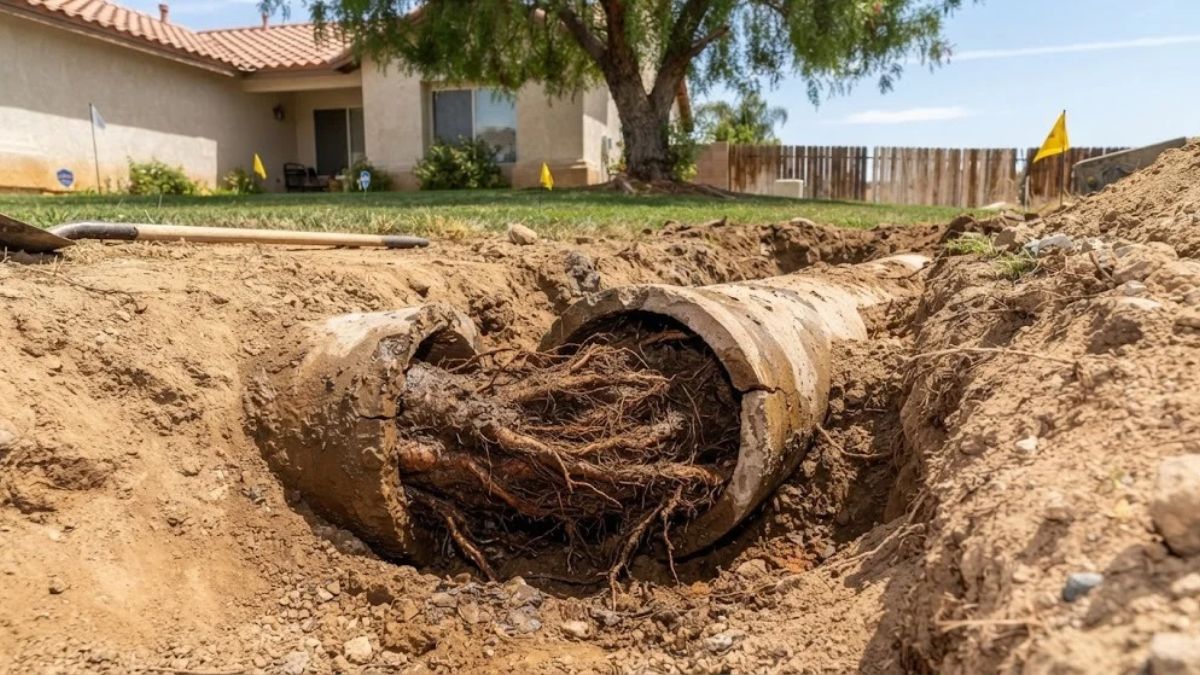
Not all trees pose the same risk to a sewer line. Some species are genuinely far more likely to cause root intrusion than others, and knowing which ones matters whether you're planning new landscaping or trying to figure out why one particular tree keeps causing trouble.
Why Desert Landscaping Picks the Worst Offenders
Fast-growing, drought-tolerant trees that provide quick shade are naturally appealing in a high-desert climate like Lancaster's - and several of the species with exactly that profile also happen to have some of the most aggressive, water-seeking root systems found in common cultivation anywhere. Mulberry, Siberian elm, cottonwood, and various fast-growing ash varieties are widely documented across horticultural sources as having shallow, spreading root systems that actively seek out moisture sources, including the condensation and minor leakage around sewer pipe joints. The same qualities that make these trees popular for quick desert shade are exactly what make them a real, ongoing risk to buried pipe.
It's About Moisture, Not the Pipe Itself
Tree roots don't seek out sewer lines because of what's inside them - they're drawn to the moisture that escapes through any small gap, whether from a joint stressed by soil movement or simple everyday condensation. Once a root finds that moisture source, it doesn't just stop at the surface; it grows directly into the gap, then continues expanding inside the pipe, catching debris and eventually causing a genuine backup. A tree species with an aggressive, opportunistic root system is simply far more likely to find and exploit that gap in the first place, compared with a species that doesn't actively hunt for supplemental water.
Root Barriers and Safe Distances
- ●
A physical root barrier installed between an existing tree and a sewer line can redirect root growth away from the pipe, though it works best installed before roots have already reached the line.
- ●
For new plantings, keeping known aggressive-rooted species a meaningful distance from the sewer lateral's known path reduces risk more effectively than trying to manage it after the fact.
- ●
Periodic camera inspection for a property with mature trees near the sewer line catches root intrusion while it's still a manageable cleaning job rather than a full backup.
Clearing Roots Without Solving the Wrong Problem
Cutting the roots out of a line - whether by mechanical means or with a hydro jetter paired with a root-cutting attachment - clears the immediate blockage, but the roots will grow back toward the same moisture source unless the underlying gap is actually sealed or lined. If a specific tree keeps causing the same section to back up repeatedly, that's often a sign the fix needs to address the pipe damage itself, not just clear the roots one more time; our trenchless pipe lining page covers what that permanent fix looks like.
Desert-Native Species Tend to Be Safer Choices
Trees genuinely adapted to Mojave and high-desert conditions - species like desert willow or various native mesquite and acacia varieties - generally have deeper, less aggressively spreading root systems than the fast-growing, water-seeking species that dominate quick-shade landscaping. They're not automatically risk-free, but a tree that isn't constantly searching for supplemental moisture the way a mulberry or cottonwood does is inherently less likely to target a sewer line's occasional dampness in the first place. Worth genuinely factoring in for any new planting near a known sewer line path, not just an afterthought once the landscaping plan is already set.
What If the Tree Is Already Decades Old?
A mature tree that's coexisted with a sewer line for decades without causing problems isn't necessarily a ticking time bomb - but a change in that relationship is worth paying attention to. If a tree that's never caused issues suddenly correlates with a new backup pattern, something has likely changed: a new crack or joint separation from soil movement, a recent root growth spurt following unusually wet conditions, or age-related root expansion finally reaching the pipe's depth for the first time. That's a reasonable trigger for a camera inspection rather than assuming the timing is coincidental.
When Removing a Tree Is (and Isn't) the Answer
Removing a mature, otherwise healthy tree solely because of a sewer concern is a significant decision - it costs real money, changes your property's shade and curb appeal, and doesn't retroactively fix roots already established in a damaged pipe. Root barrier installation, targeted pruning of surface roots away from the line's path, and simply repairing the actual pipe damage are all worth exploring before removal becomes the only option left on the table. We'll give you our honest, specific read on which category your particular situation actually falls into, based on what the camera inspection actually shows rather than a guess made from the surface alone.
FAQ
Mulberry, Siberian elm, cottonwood, and fast-growing ash varieties are widely documented as having aggressive, shallow, moisture-seeking root systems - and they're also commonly planted in desert landscaping specifically for their fast growth and shade.
There's no single universal number since it depends on the species and the line's actual depth and path, but as a general principle, more distance and less aggressive root species both meaningfully reduce risk.
Removing the tree stops new root growth, but roots already established in a damaged pipe joint don't disappear on their own - the pipe itself still needs to be inspected and, if damaged, repaired.
Need a Plumber in Lancaster?
Call (714) 750-8637 - we'll get to Lancaster soon.