Same Drain, Clogged Again? Snaking Might Not Be Enough
If a drain has needed snaking more than once in the past year, or if the clog is tied to tree roots or years of grease and hard-water scale buildup, a snake is only ever punching a hole through the immediate blockage - it isn't clearing what's coating the rest of the pipe. Hydro jetting uses high-pressure water to scour the full interior of the line, which is what actually breaks the repeat-clog cycle.
What's Actually Happening Inside the Pipe
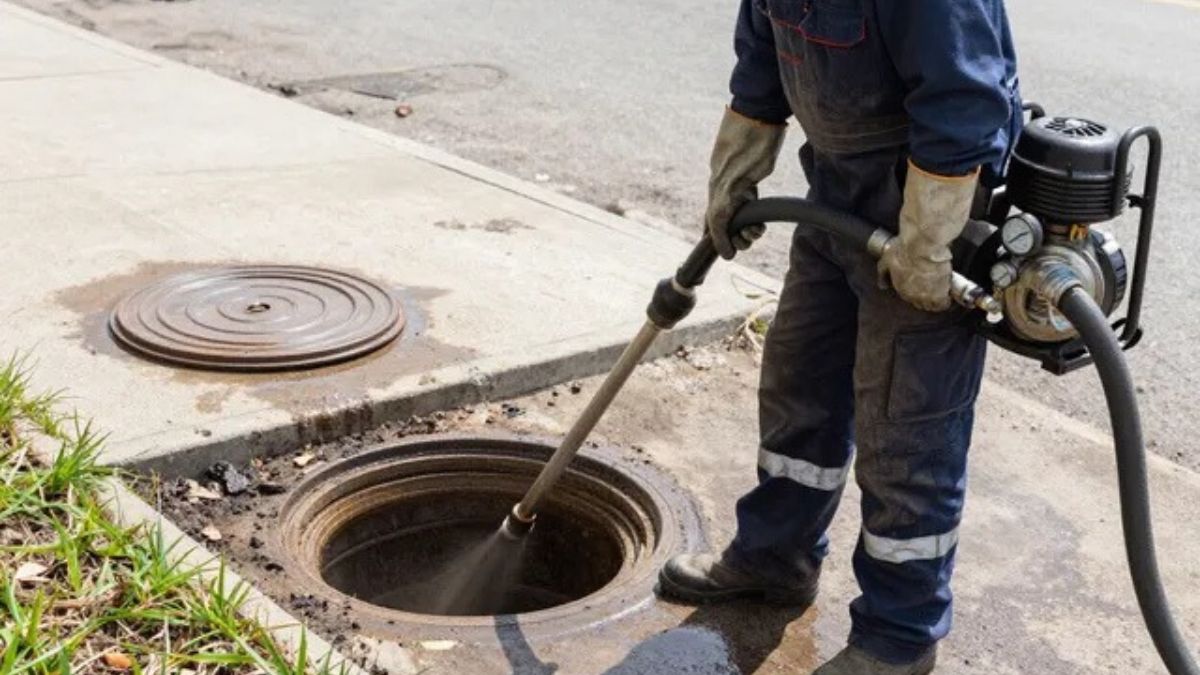
A hydro jetting machine pushes water through a flexible hose and specialized nozzle at pressures that can reach roughly 1,500 PSI for smaller branch lines and up to 4,000 PSI for a main sewer line. The nozzle sprays both forward and backward as it's fed through the pipe, scouring grease, mineral scale, and debris off the interior walls rather than just breaking a path through the middle of a clog the way a snake does. For root intrusion specifically, a hydraulic root-cutting attachment can be paired with the jetting process to physically cut through roots that have grown into the line.
Why We Camera-Inspect Before Jetting Older Lines
Hydro jetting is safe on structurally sound pipe of any common material - PVC, cast iron, and even older clay pipe all handle it well at the right pressure setting. The real risk is jetting a line that already has a crack, a significant break, or advanced deterioration, since high-pressure water can turn a hidden weak spot into a bigger failure. That's why a camera inspection of an older line comes first whenever there's real uncertainty about its condition - we're not guessing at whether jetting is appropriate, we're confirming it.
Jetting vs. Snaking vs. Trenchless Lining
- ●
Snaking clears a single, first-time blockage quickly and affordably, but leaves the rest of the pipe's interior coated.
- ●
Hydro jetting clears the full pipe interior, the right call for recurring clogs, grease buildup, or root intrusion, provided the pipe itself is structurally sound.
- ●
Trenchless pipe lining is the next step up when the pipe itself is cracked or deteriorating, not just dirty - see our trenchless lining page for that case.
Why This Matters More in Lancaster
Two Lancaster-specific factors make jetting more relevant here than in a lot of markets: extremely hard water leaves mineral scale coating pipe interiors faster than in a soft-water city, and older neighborhoods with mature trees near sewer laterals see real, recurring root intrusion tied to seasonal soil movement. Both problems respond to jetting in a way a snake alone doesn't.
What Access We Actually Need
Jetting is done through an existing cleanout wherever one is accessible, so most jobs don't require any excavation or new access points. If a home's plumbing doesn't have a conveniently placed cleanout - common in some older properties - we can typically work through a toilet flange or another suitable fixture connection instead, though a cleanout is always the preferred access point when one exists. We'll confirm what's actually available on your property before the job starts, not after.
Preventing the Next Clog, Not Just Clearing This One
For a property with a documented history of root intrusion or grease buildup in the same section of pipe, a scheduled maintenance jetting - done periodically before a full clog forms rather than only after one happens - can keep the line clear well beyond what reactive service alone achieves. This is worth discussing for a commercial kitchen's grease-prone lines or a residential line with known recurring root problems, where preventing the next call is more cost-effective than responding to it.
Questions
It's safe for structurally sound pipe of any common material, including older clay and cast iron. The concern is a pipe that's already cracked or deteriorating, which is exactly why we camera-inspect an older line first when there's real uncertainty.
Snaking breaks through a blockage and opens a path for water. Hydro jetting scours the entire interior of the pipe, removing the scale, grease, or roots that caused the clog rather than just punching past them.
A typical job runs about 60 to 90 minutes, depending on the length of the line and how much buildup needs to be cleared.
Yes, especially when paired with a hydraulic root-cutting attachment designed specifically for cutting through root intrusion during the jetting process.
Ready When You Are
Call (714) 750-8637 - we'll get to Lancaster soon.