Water Bill Jumped, or Something Just Smells Off?
A water bill that's noticeably higher with no change in how much water you're actually using, a musty smell with no visible source, a damp patch on a wall or ceiling, or the sound of running water when nothing's turned on - these are the signals that send us looking for a leak you can't see. It might be under a slab, inside a wall, along a supply line in the yard, or in a pool or irrigation system. Leak detection is how we find it without guessing or opening up more of your home than necessary.
Beyond the Slab: Other Places a Hidden Leak Shows Up
Slab leaks get most of the attention because they're common in Lancaster's older, slab-foundation homes, and we cover that specific case in depth on our slab leak detection page. But hidden leaks show up in plenty of other places too: inside a wall behind a water heater or washing machine connection, along a buried water service line running from the meter to the house, in an underground irrigation line feeding a sprinkler system, or in a pool or spa's plumbing if the property has one. Each location has a different detection approach, but the underlying goal is the same - find the exact spot before opening anything up.
Detection Methods We Actually Use
- 1
Meter flow check. We shut off every fixture and watch the water meter's low-flow indicator - any movement at all confirms water is leaving the system somewhere.
- 2
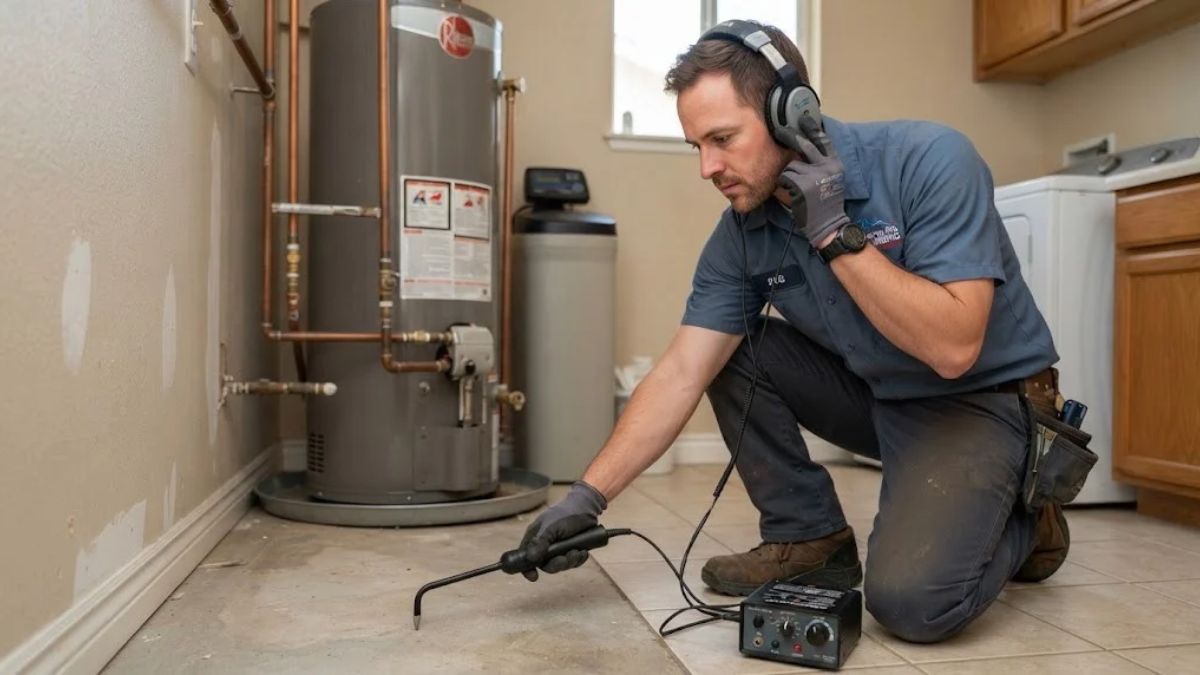
Acoustic listening equipment. Pressurized water escaping a pipe makes a distinct sound that specialized listening devices can pinpoint through concrete, drywall, or soil.
- 3
Thermal imaging. A leak often creates a temperature difference in the surrounding material, which a thermal camera can reveal without cutting into anything.
- 4
Video camera inspection. For sewer and drain lines specifically, a camera run through the pipe shows cracks, joint separation, or root intrusion directly.
Why We Don't Just Start Cutting
Opening up drywall, tile, or concrete on a guess means repairing more than the actual leak required - and sometimes missing the real source entirely if the guess is wrong. Water travels along the path of least resistance once it escapes a pipe, so a wet spot on a wall or floor doesn't always sit directly above or beside the actual leak point. Proper detection narrows the work to the specific section that actually needs to be opened, which is faster, less disruptive, and less expensive than an exploratory approach.
What Happens Next
Once a leak is located, the repair itself depends on where it is and what caused it - a slab leak goes to our slab leak repair process, a drain or sewer line issue goes to drain cleaning, and if the leak has already caused visible water damage to flooring, drywall, or ceilings, our water damage restoration team handles the cleanup and drying separately from the plumbing fix itself.
Why Detection Usually Pays for Itself
An undetected leak keeps running until it's found, which means the water it wastes shows up on every bill in the meantime - often for weeks or months before anyone notices a pattern rather than assuming a one-off high bill. Detection isn't an added cost on top of the eventual repair; it's what keeps the repair itself small and targeted instead of exploratory, and it stops the ongoing waste immediately once the source is found. Looked at that way, a detection visit tends to pay for itself well before the repair even begins.
Questions
An unexplained jump in your water bill is one of the most reliable signs of a hidden leak somewhere in the system - the water meter test is usually the fastest way to confirm it before anything else.
In most cases, yes. Acoustic and thermal detection methods locate a leak's approximate position without opening anything, so the actual repair access point can be targeted precisely.
A straightforward case with a clear meter-test result and an accessible leak location can often be pinpointed in a single visit. More complex cases, such as a leak along a long buried line, may take longer to narrow down.
Yes, though these systems sometimes require a different approach than a household supply line - let us know what you're dealing with when you call so we bring the right equipment.
Ready When You Are
Call (714) 750-8637 - we'll get to Lancaster soon.